

Agriculture’s Role in Climate Change
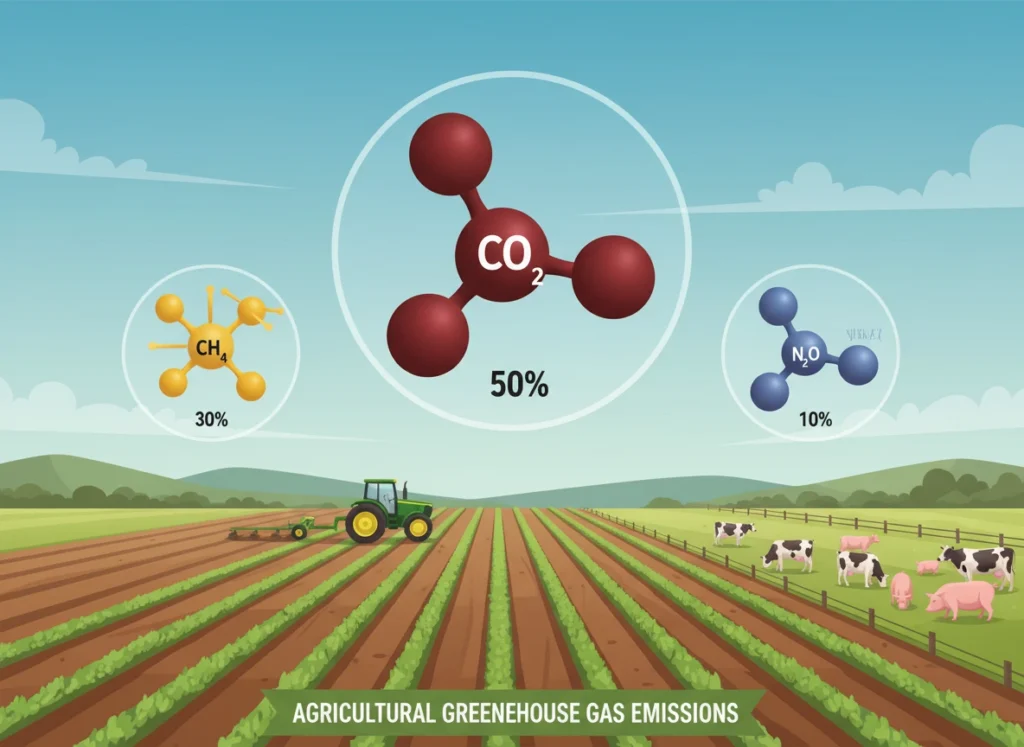
Agriculture causes global warming primarily through greenhouse gas emissions and land use changes that release carbon into the atmosphere. The sector contributes approximately 10-12% of global greenhouse gas emissions through practices like livestock production (which generates methane), synthetic fertilizer application (which releases nitrous oxide), deforestation for farmland expansion, and the disturbance of carbon-rich soils. When forests are cleared for agriculture and soil is tilled, stored carbon is released as CO₂, while livestock and fertilizers add methane and nitrous oxide—gases that are significantly more potent than carbon dioxide at trapping heat.
Understanding these specific practices and their environmental impact is crucial for developing effective solutions to reduce agriculture’s carbon footprint while maintaining food security.
Agriculture’s Emissions Share: The Numbers Behind the Impact
Global Impact
Worldwide, agriculture accounts for 10-12% of total greenhouse gas emissions, with some estimates reaching as high as 24% when including related land use changes like deforestation. This makes agriculture one of the largest contributors to climate change after energy production and transportation. The sector releases three primary greenhouse gases:
- Carbon dioxide (CO₂) from deforestation and soil degradation
- Methane (CH₄) from livestock digestion and rice cultivation
- Nitrous oxide (N₂O) from synthetic fertilizers and manure
Notably, methane is 25 times more potent than CO₂ over a 100-year period, while nitrous oxide is approximately 298 times more powerful, making even relatively small agricultural emissions highly significant for global warming.
U.S. Contribution
In the United States, agriculture represents approximately 10% of total greenhouse gas emissions. American agriculture’s emissions profile differs slightly from global patterns, with a larger emphasis on livestock production and synthetic fertilizer use. The U.S. agricultural sector emitted approximately 669 million metric tons of CO₂ equivalent in recent years, with livestock accounting for roughly one-third of these emissions and soil management practices contributing another significant portion.
How Agriculture Causes Global Warming: Main Practices
Deforestation for Agricultural Expansion
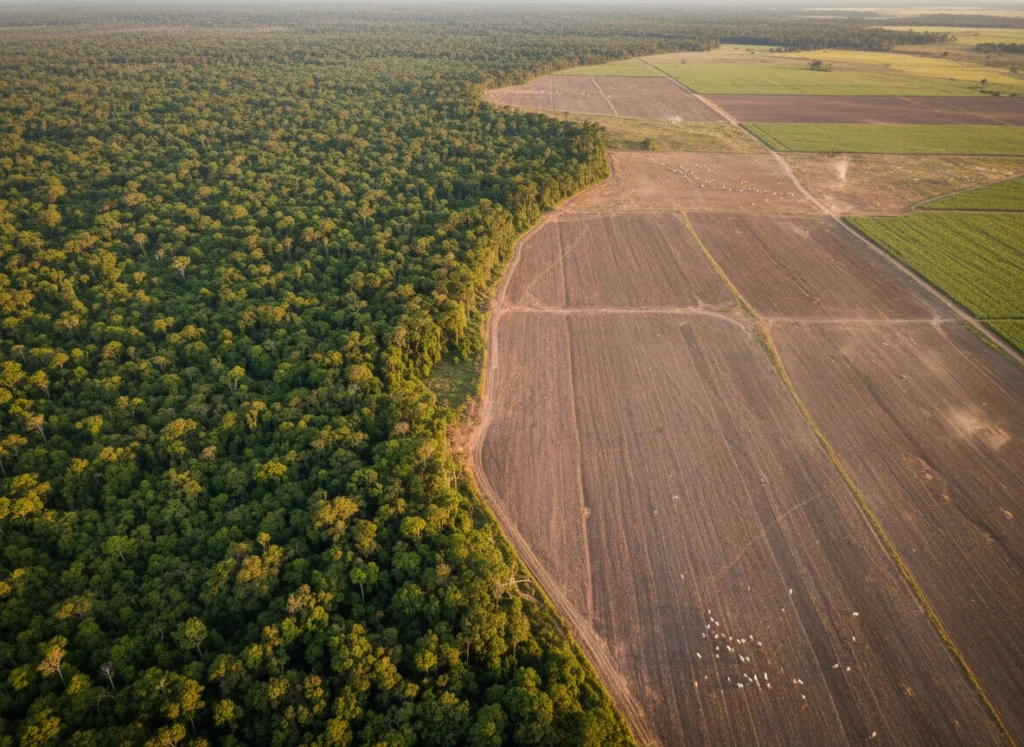
Converting forests into farmland represents one of agriculture’s most damaging climate impacts. Forests act as natural carbon sinks, storing vast amounts of carbon in trees and soil. When cleared for agriculture—particularly for cattle ranching and soybean production—this stored carbon is released into the atmosphere. The Amazon rainforest alone has lost millions of acres to agricultural expansion, releasing billions of tons of CO₂ while simultaneously eliminating the forest’s capacity to absorb future emissions.
Beyond carbon release, deforestation destroys biodiversity, disrupts water cycles, and eliminates natural ecosystems that provide crucial environmental services.
Livestock Methane Production
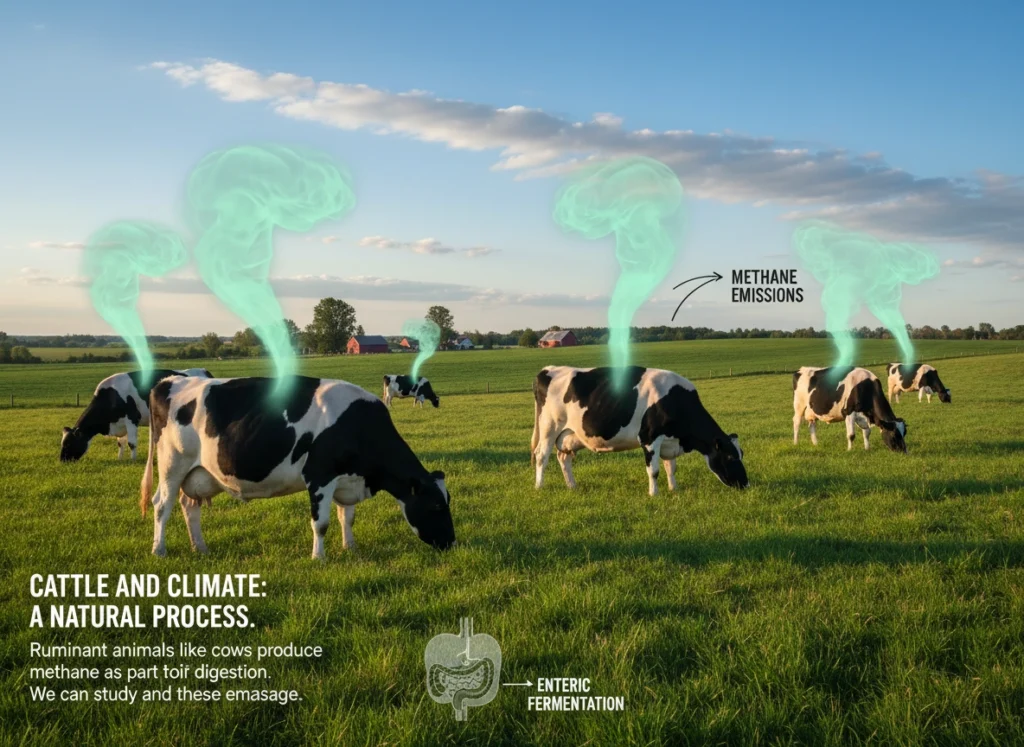
Livestock, particularly cattle, sheep, and goats, produce substantial methane emissions through a digestive process called enteric fermentation. When ruminant animals digest food, microbes in their stomachs break down plant material and produce methane as a byproduct, which the animals release primarily through belching. Globally, livestock account for approximately 14.5% of all human-induced greenhouse gas emissions.
Beyond enteric fermentation, livestock production contributes to climate change through manure management, which releases both methane and nitrous oxide, and through the land required for grazing and feed production, which often drives deforestation.
Synthetic Fertilizer Use
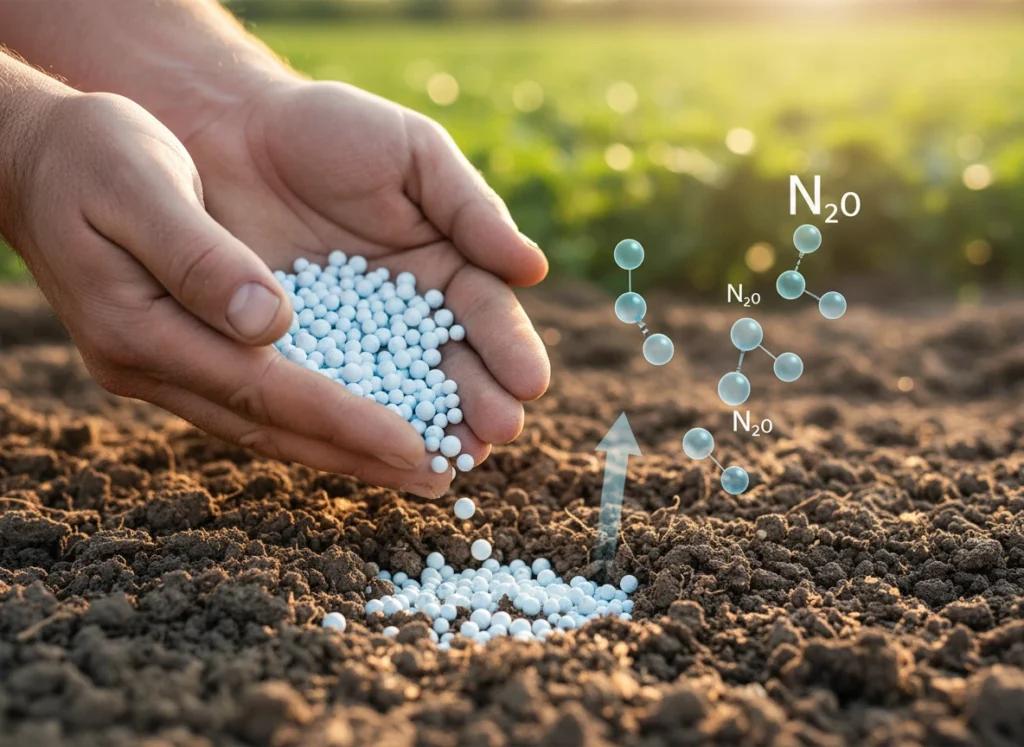
Modern industrial agriculture relies heavily on synthetic nitrogen fertilizers to boost crop yields. However, when these fertilizers are applied to soil, microbes convert some of the nitrogen into nitrous oxide, a greenhouse gas nearly 300 times more potent than CO₂. Globally, agricultural soils treated with synthetic fertilizers are the largest source of nitrous oxide emissions.
The production of synthetic fertilizers is itself energy-intensive, requiring substantial fossil fuel inputs. This manufacturing process adds another layer of carbon emissions to the fertilizer lifecycle, compounding agriculture’s climate impact.
Soil Carbon Loss Through Tillage
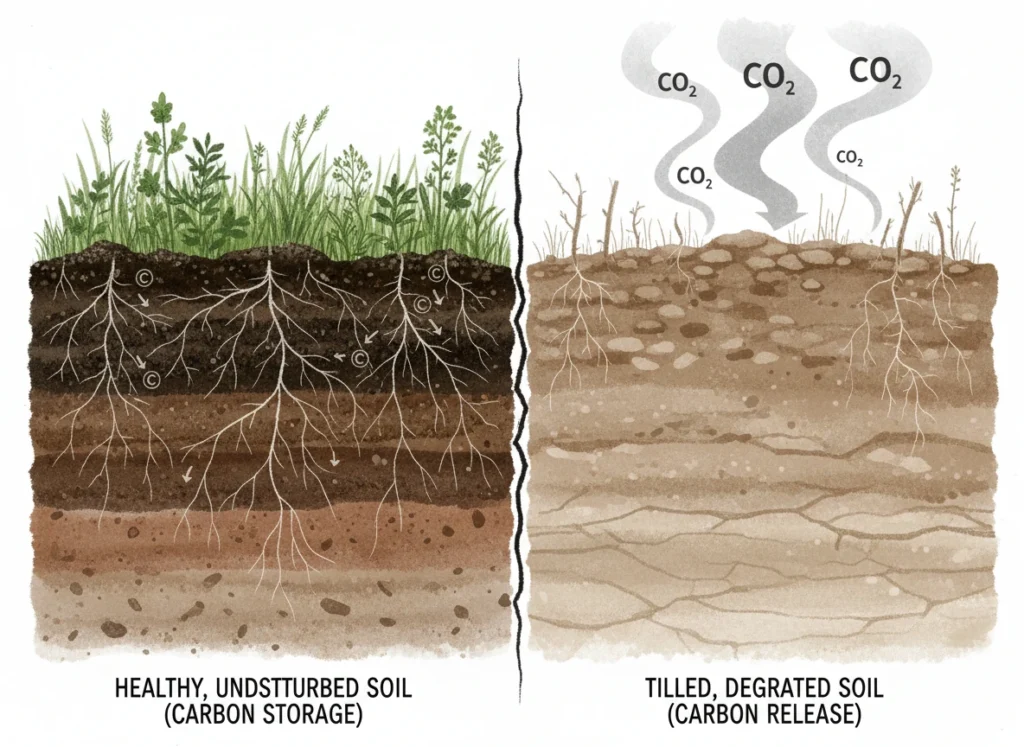
Healthy soil stores enormous amounts of carbon—in fact, soils contain more carbon than the atmosphere and all plant life combined. However, conventional tillage practices disturb soil structure, exposing organic matter to oxygen and causing rapid decomposition that releases CO₂. Intensive plowing, monocropping, and leaving fields bare between seasons all accelerate soil carbon loss.
This process not only contributes to global warming but also degrades soil health, reducing fertility and water retention capacity over time. The result is a vicious cycle where degraded soils require more synthetic inputs, generating additional emissions.
Food Transport and Distribution
While often less significant than production emissions, the transportation of food—especially via air freight—adds to agriculture’s carbon footprint. The globalized food system moves products thousands of miles from farm to table, burning fossil fuels throughout the supply chain. Refrigeration during storage and transport adds further energy consumption and associated emissions.
However, it’s worth noting that transportation typically accounts for a smaller portion of food’s total emissions compared to production methods. A locally produced beef product may have a larger carbon footprint than internationally shipped vegetables, depending on production practices.
Consequences for Climate and Agriculture: A Dangerous Feedback Loop
Environmental Effects Beyond Temperature
Agriculture’s contribution to global warming extends beyond simple temperature increases. The sector affects climate through multiple interconnected pathways. Agricultural emissions contribute to rising global temperatures, which in turn intensify extreme weather events including droughts, floods, and heat waves. These climate changes disrupt natural ecosystems, accelerate species extinction, and alter precipitation patterns worldwide.
Agricultural practices also contribute to ocean acidification as atmospheric CO₂ dissolves in seawater, threatening marine ecosystems. Additionally, fertilizer runoff creates dead zones in coastal waters, while pesticide use affects pollinator populations already stressed by climate change.
Impact on Farming: The Sector Suffers Its Own Consequences
Ironically, agriculture is simultaneously a victim of the climate change it helps create. Farmers worldwide face increasingly unpredictable weather patterns, shifting growing seasons, and more frequent extreme events that damage crops and livestock. Droughts reduce yields and strain water resources, while excessive rainfall causes flooding and soil erosion.
Rising temperatures allow pests and diseases to expand into previously unsuitable regions, forcing farmers to adapt their practices or face significant losses. Changes in precipitation patterns disrupt traditional planting schedules, and heat stress reduces crop productivity and livestock health. This feedback loop threatens global food security, particularly in vulnerable regions already facing agricultural challenges.
Solutions and Sustainable Alternatives: Pathways to Climate-Friendly Agriculture
Regenerative Agriculture Practices
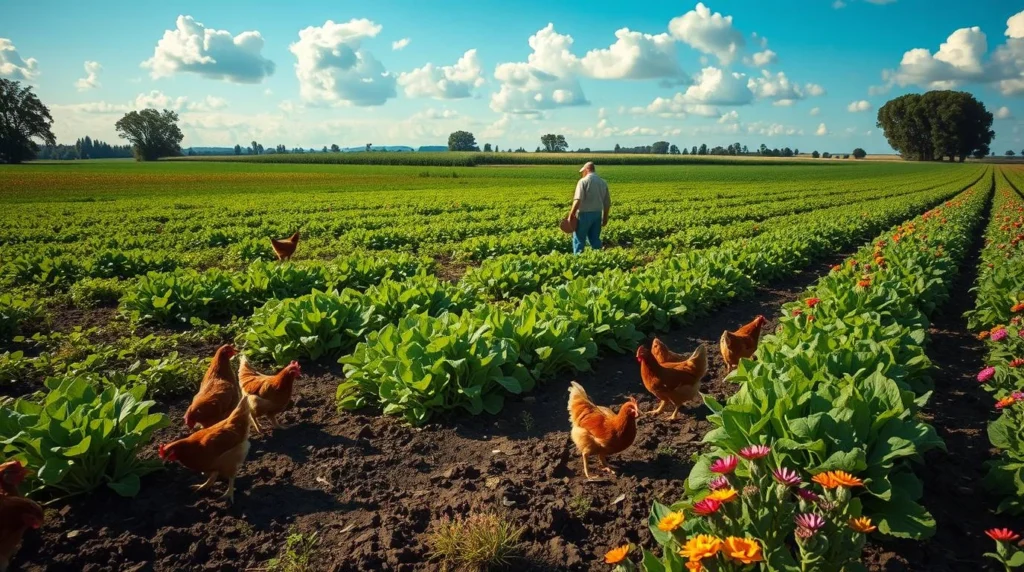
Regenerative agriculture offers a promising approach to reduce emissions while actually improving soil health and productivity. These practices include cover cropping, reduced or no-till farming, diverse crop rotations, and integrating livestock with crop production. By keeping living roots in the soil year-round and minimizing soil disturbance, regenerative methods can transform agricultural land from a carbon source into a carbon sink.
Studies show that regenerative practices can sequester significant amounts of carbon in soil while simultaneously improving water retention, reducing erosion, and decreasing reliance on synthetic inputs. Farmers adopting these methods often report improved long-term profitability alongside environmental benefits.
Livestock Emission Reduction Strategies
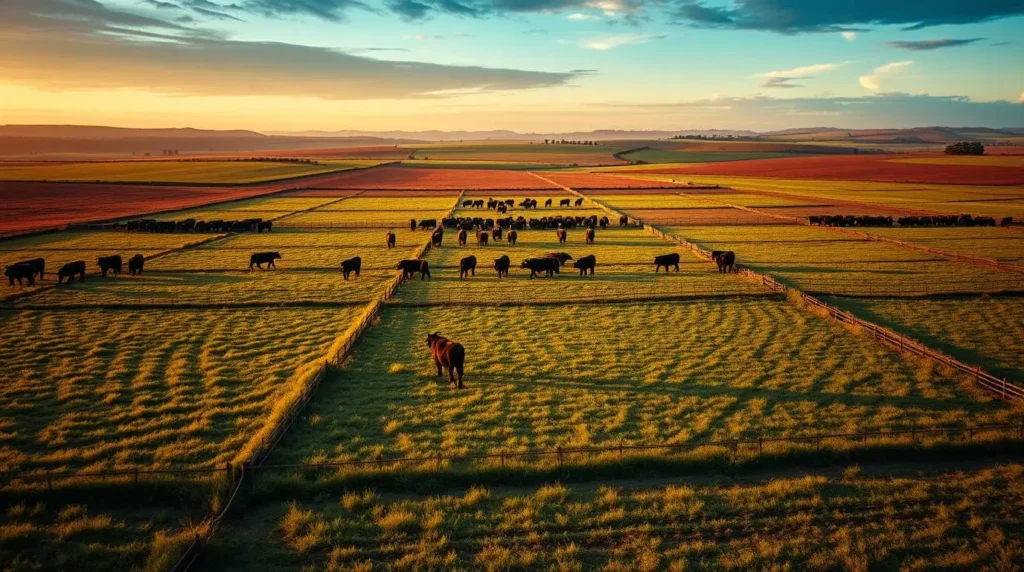
Several strategies can significantly reduce emissions from livestock production without eliminating animal agriculture entirely. Feed additives and supplements can reduce enteric methane production by altering rumen fermentation. Improved breeding and animal management practices create more efficient livestock that produce more meat or milk per unit of feed.
Rotational grazing systems that mimic natural herd movements can improve soil health and carbon sequestration while maintaining livestock production. Additionally, better manure management through composting or biodigesters captures methane for energy use rather than releasing it into the atmosphere.
Smarter Fertilizer Use and Alternatives
Precision agriculture technologies enable farmers to apply fertilizers more efficiently, matching application rates to specific field conditions and crop needs. This reduces excess nitrogen that would otherwise convert to nitrous oxide. Slow-release fertilizers and nitrification inhibitors can further reduce emissions by controlling how nitrogen becomes available to plants.
Organic alternatives like compost, manure, and cover cropping can reduce or eliminate synthetic fertilizer dependence while building soil health. Leguminous cover crops naturally fix atmospheric nitrogen in the soil, providing a renewable fertilizer source that doesn’t generate manufacturing emissions.
Local and Regional Food Systems

Strengthening local and regional food networks reduces transportation emissions while building community resilience. Farmers markets, community-supported agriculture (CSA) programs, and regional food hubs connect consumers directly with nearby producers, shortening supply chains and reducing the need for long-distance transport and refrigeration.
Beyond emissions reduction, local food systems keep money in regional economies, preserve farmland near communities, and give consumers greater transparency about how their food is produced. These systems also tend to favor smaller-scale, diversified farms that often employ more sustainable practices than industrial operations.
Taking Action: From Farm to Fork
Agriculture’s role in causing global warming is substantial but not insurmountable. The sector contributes approximately 10-12% of global greenhouse gas emissions through practices including deforestation, livestock production, synthetic fertilizer use, soil degradation, and food transportation. These emissions accelerate climate change, which in turn threatens the agricultural systems that feed our growing population—creating an urgent need for transformation.
The Path Forward
Addressing agriculture’s climate impact requires action at multiple levels. Farmers can adopt regenerative practices, reduce tillage, improve livestock management, and use precision agriculture technologies. Policymakers should incentivize sustainable farming through subsidies, technical assistance, and research funding while removing supports for practices that degrade soil and increase emissions.
What You Can Do
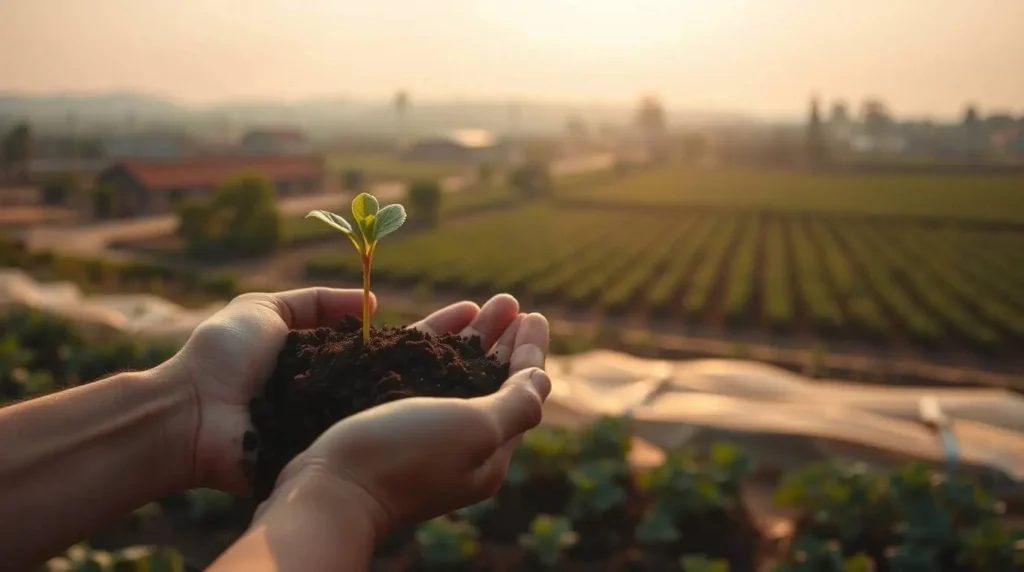
As individuals, we can support climate-friendly agriculture through our food choices and advocacy:
- Choose sustainably produced foods from farms practicing regenerative agriculture
- Reduce food waste, which accounts for significant unnecessary emissions
- Eat more plant-based meals to reduce demand for emission-intensive livestock products
- Buy local and seasonal when possible to support regional food systems
- Advocate for policy changes that support sustainable agriculture and climate action
- Support organizations working to transform agricultural systems
The transformation of agriculture from climate problem to climate solution represents one of our greatest opportunities to address global warming while building a more resilient and equitable food system. By understanding how agriculture causes global warming and embracing proven solutions, we can create a future where farming nourishes both people and planet.


Hey very nice site!! Guy .. Beautiful ..
Superb .. I’ll bookmark your web site and take the feeds additionally?
I am satisfied to search out so many helpful info right here in the post, we need
develop extra strategies in this regard, thanks for sharing.
. . . . .
Very good post. I will be experiencing a
few of these issues as well..
I am sure this article has touched all the internet viewers, its really really nice piece of writing on building up new weblog.
I can’t get enough of your website! Your posts are so well-researched, and I
love the clarity in your writing. Have you considered guest posting on other sites to expand your reach?
Keep up the excellent work!